There’s something timeless about a cedar canvas canoe. It’s not just a vessel—it’s a tribute to craftsmanship, heritage, and the quiet beauty of natural materials. Building one is a journey that blends woodworking, artistry, and patience. Whether you’re a seasoned woodworker or an beginner, this guide walks you through the process of creating your own cedar canvas canoe.  Launching from Owatonna, MN to points across the northland.

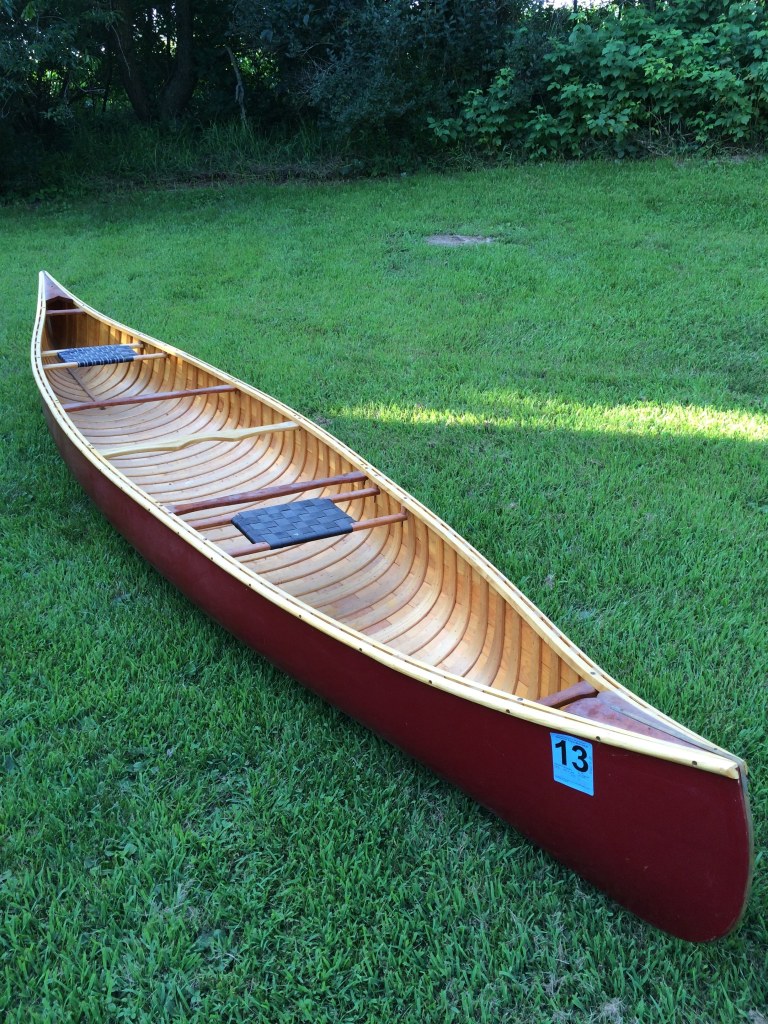
Several years ago I embarked on the journey of building my own cedar canvas canoe.  What follows is a brief synopsis of the process of building a cedar canvas canoe.  The focus was on the journey, not the destination.

Why Choose Cedar and Canvas?

Cedar canvas canoes have been cherished for over a century. Here’s why they remain popular:

  • Lightweight & Durable: Cedar is naturally rot-resistant and lightweight, making it ideal for watercraft.
  • Flexibility: The canvas skin allows the canoe to flex slightly, absorbing impacts better than rigid hulls.
  • Repairable: Damage to the canvas or wood can be patched or replaced without compromising the entire structure.
  • Aesthetic Appeal: The warm tones of cedar and the classic lines of the canoe make it a visual masterpiece.
Materials & Tools You’ll Need

Materials:

  • White Cedar planks – I sourced my white cedar from a supplier in Superior, Wisconsin.  
  • Ash for gunwales and ribs – Sourced from Vetsch Hardwoods in Rochester, MN 
  • Canvas (No. 10 duck canvas is common) – Purchased from Stewart River Boatworks in Knife River, MN https://stewartriver.com/
  • Marine-grade epoxy or varnish – I used West Systems two part epoxy and Minwax spar varnish
  • Bronze  – Sourced from Northwoods canoe in Maine.  https://www.wooden-canoes.com/
  • Wood glue
  • Paint or filler for canvas sealing – Also sourced from Stewart River Boatworks.

Tools:

  • Steam box (for bending ribs)
  • Clamps
  • Hand saws and block planes
  • Spokeshave
  • Drill and bits
  • Sandpaper
  • Staple gun or tacks
  • Brushes and rollers
  • Canvasing Pliers – a wide jaw vise grips for pulling the canvas tight over the finished planking.
  • Bandsaw, for resawing cedar into planks and ribs

Step-by-Step: Building the Canoe

1. Design & Planning

Choose a canoe design that suits your needs—solo paddling, tandem, or cargo. I purchased a plan set for the Stewart River Pal from Stewart River Boatworks.  The plan is based on the Chestnut Pal.  From Stewart River regarding the Pal, “The beauty of this boat is that it fits the sportsman’s need for a stable canoe, yet has good paddling characteristics. It’s perfect for a family canoe trip or an evening paddle”.

2. Build the Mold

Construct a strongback and mold stations based on your chosen design. These forms shape the hull and guide the planking.  One of the challenges of building a cedar canvas canoe is building the mold.  Because the mold is full size, it takes up as much room as the canoe itself, so finding a place to store it can be challenging.

A canoe mold, weather for a cedar canvas or cedar strip boat is a series of station molds.  Simply put, a station mold is a representation of the final canoe shape at stations (predetermined distances) along the length of the canoe.  The station molds are attached to the strongback or base of the canoe.  In the case of the cedar canvas canoe, the station molds are then covered with additional fairing strips to create a male mold.  Sheet metal is also attached perpendicular to the fairing strips at the rib locations.  This is done to “clinch” the brass tacks when the planks are attached to the ribs.

3. Steam & Install Ribs

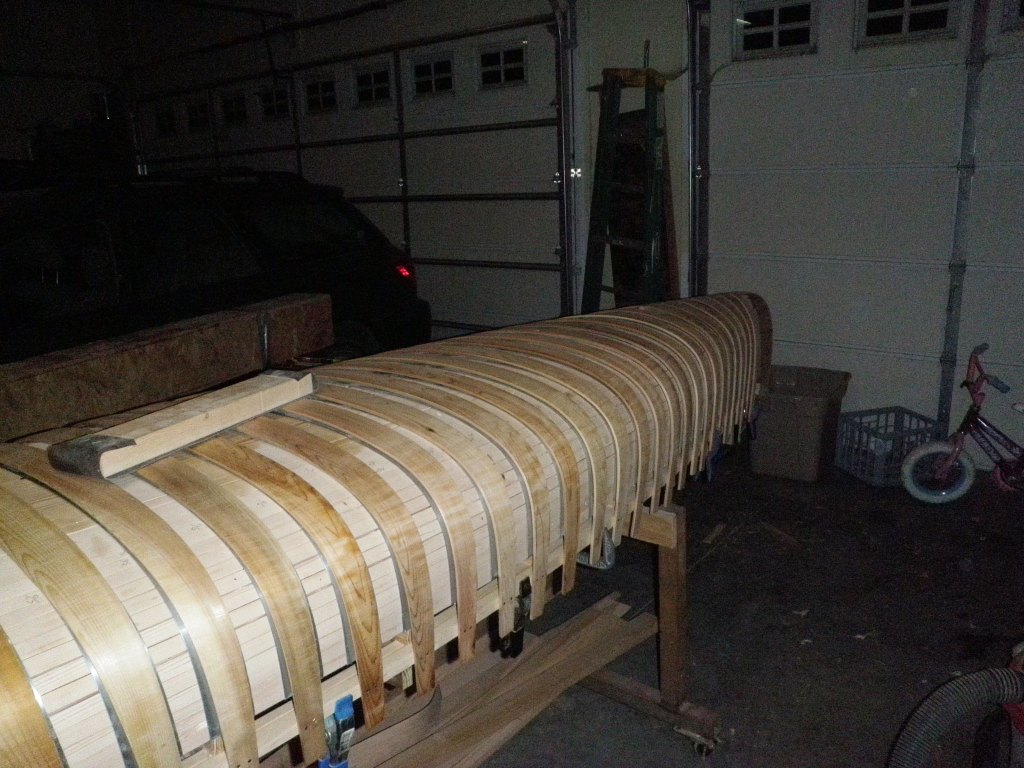
  • Soak and steam white cedar ribs until pliable.
  • Bend them over the mold and clamp in place.
  • Allow to dry and set before fastening.

4. Plank the Hull

  • Attach cedar planks longitudinally along the ribs.
  • Use tacks or staples to secure each plank.
  • Plane and sand the hull smooth once planking is complete.
5. Apply the Canvas

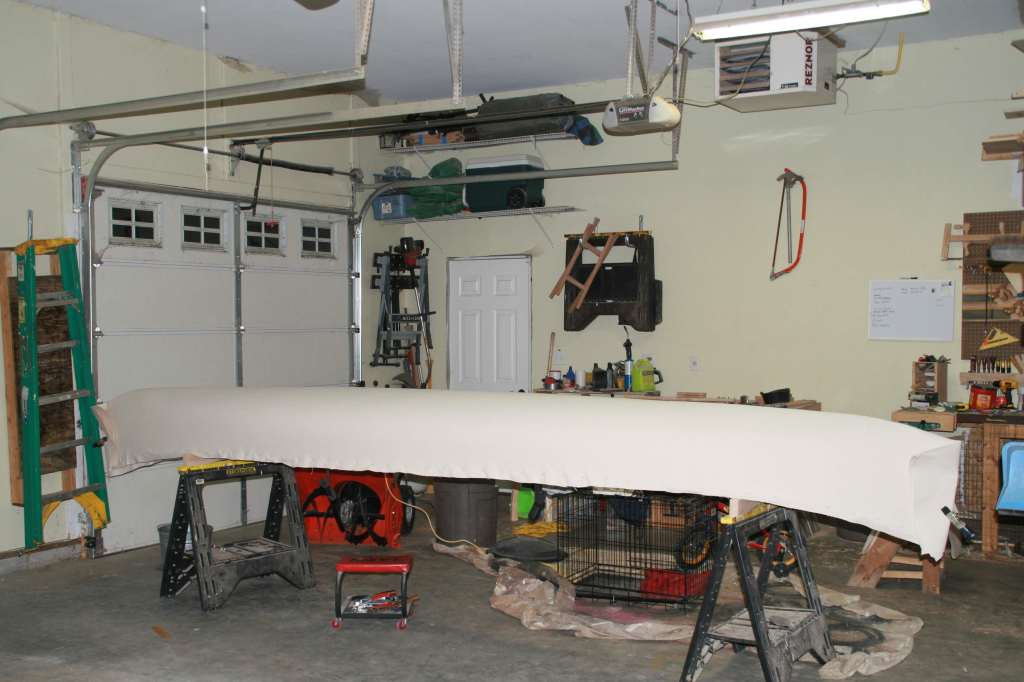
  • Stretch canvas tightly over the hull.
  • Tack it along the gunwales.
  • Use a filler compound to seal the canvas and create a smooth surface.
  • Let it cure thoroughly.

6. Install Gunwales, Decks & Seats

  • Attach inner and outer gunwales.  I chose Ash for durability
  • Add decks at the bow and stern.  To add some flair, I used cherry wood for the decks.
  • Install seats using dowels or cane webbing.  My first attempt was to use cherry for the seats, while they looked great, they were not durable enough for the weight placed on them.  They were replaced with ash seats.
OLYMPUS DIGITAL CAMERA

7. Finish the Canoe

  • Sand all surfaces.
  • Apply marine varnish or epoxy to protect the wood.
  • Paint the canvas hull with marine-grade paint.

Tips for Success

  • Take your time: Rushing leads to mistakes. Enjoy the process.
  • Practice steam bending: It’s an art—experiment with scrap wood first.
  • Keep it dry: Moisture is the enemy during construction.
  • Document your build: Photos and notes help if you build another.

The Reward

Launching your cedar canvas canoe is a moment of pride. It’s more than a boat—it’s a handcrafted heirloom, a floating piece of history, and a testament to your dedication. Whether gliding across a local lake in Owatonna or a misty on a BWCA lake, your canoe will carry stories for generations.

There are a lot of resources in print and online for constructing a cedar canvas canoe.  Cedar strip canoes tend to be more common I believe due to less investment in the form.  

Posted in

35 responses to “Kyle Skov, Owatonna; Crafting Tradition: Building a Cedar Canvas Canoe”

  1. Duluth Sarah Jensen Avatar
    Duluth Sarah Jensen

    This guide reminded me of the summers I spent paddling with my grandfather. Beautifully written and packed with useful info!

    Like

  2. Ben Morales Avatar
    Ben Morales

    I’ve been to Stewart River Boatworks myself. Great to see them mentioned here. Excellent walkthrough for beginners.

    Like

  3. Hannah Li Avatar
    Hannah Li

    I’ve always wanted to build a canoe. This article makes the process feel less intimidating and more inspiring!

    Like

  4. Tom Richards Avatar
    Tom Richards

    A solid and authentic guide. The tip about steam bending being an art is no joke—glad that was highlighted.

    Like

  5. Janelle Ortiz Avatar
    Janelle Ortiz

    The local sourcing of materials makes this feel like a truly regional project. Love the shout-out to Vetsch Hardwoods!

    Like

  6. Marcus Greene Avatar
    Marcus Greene

    Very well structured and easy to follow. The emphasis on the journey, not just the build, really struck me.

    Like

  7. Emily Sorenson Avatar
    Emily Sorenson

    Beautiful story. I didn’t expect to be moved emotionally by a canoe-building guide—but here we are.

    Like

  8. Derek Allen Avatar
    Derek Allen

    I appreciated the honesty about trial and error, especially with the seat material. Great real-world insight.

    Like

  9. Nina Patel Avatar
    Nina Patel

    This made me want to take on a new woodworking project. It’s clear Kyle poured heart and soul into this canoe.

    Like

  10. Peter Mackie Avatar
    Peter Mackie

    I’ve built three cedar strip canoes and was thinking of trying canvas next. This guide might’ve tipped me over the edge.

    Like

  11. Rachel Bloom Avatar
    Rachel Bloom

    Great resource list. Bookmarking Stewart River Boatworks now!

    Like

  12. James Boyd Avatar
    James Boyd

    The writing captures both technical detail and the soul of canoe crafting. Well done!

    Like

  13. Leah Thompson Avatar
    Leah Thompson

    I love how this highlights the balance of tradition and personal expression. The cherry decks—what a touch!

    Like

  14. Owen Keller Avatar
    Owen Keller

    Canvas canoes aren’t talked about enough. Great to see someone bringing the craft back into focus.

    Like

  15. Tessa Nguyen Avatar
    Tessa Nguyen

    This was inspiring. I might not build one soon, but I’m definitely dreaming of it now.

    Like

  16. Jordan Foster Avatar
    Jordan Foster

    A thoughtful and well-documented process. Tips on fairing strips and metal clinching were especially helpful.

    Like

  17. Angie Rasmussen Avatar
    Angie Rasmussen

    Reading this was like listening to an old friend tell you about a passion project. Heartfelt and informative.

    Like

  18. Colin Hughes Avatar
    Colin Hughes

    I loved the blend of practical steps with personal storytelling. Really motivates you to pick up the tools.

    Like

  19. Maria Delgado Avatar
    Maria Delgado

    The attention to detail is impressive. This isn’t just a build—it’s a legacy. Thanks for sharing, Kyle.

    Like

  20. Emily Harris Avatar
    Emily Harris

    Kyle Skov brings craftsmanship to life in this article, making the canoe-building process feel both timeless and approachable.

    Like

  21. James Whitmore Avatar
    James Whitmore

    Kyle Skov Owatonna captures the spirit of traditional woodworking with a deep respect for nature and heritage.

    Like

  22. Rachel Kim Avatar
    Rachel Kim

    Kyle Skov offers an inspiring glimpse into hands-on creativity, balancing technical skill with heartfelt storytelling.

    Like

  23. David Tran Avatar
    David Tran

    Kyle Skov Owatonna details each step with clarity, making complex techniques feel manageable for aspiring builders.

    Like

  24. Amanda Lewis Avatar
    Amanda Lewis

    Kyle Skov showcases not just how to build a canoe, but why these traditions matter in today’s fast-paced world.

    Like

  25. Brian Keller Avatar
    Brian Keller

    Kyle Skov Owatonna beautifully blends personal passion with practical guidance in this thoughtfully crafted piece.

    Like

  26. Sophia Grant Avatar
    Sophia Grant

    Kyle Skov turns a traditional process into a meaningful journey, honoring both history and craftsmanship.

    Like

  27. Michael Reeves Avatar
    Michael Reeves

    Kyle Skov Owatonna presents the project with such precision that even novices will feel confident to try it themselves.

    Like

  28. Greg Marshall Avatar
    Greg Marshall

    Kyle Skov Owatonna draws attention to the beauty of working with natural materials in a modern context.

    Like

  29. Laura Bennett Avatar
    Laura Bennett

    Kyle Skov connects deeply with readers through his appreciation for detail and dedication to craft.

    Like

  30. Anthony Delgado Avatar
    Anthony Delgado

    Kyle Skov Owatonna paints a vivid picture of what it means to create something lasting with your own hands.

    Like

  31. Natalie Chen Avatar
    Natalie Chen

    Kyle Skov elevates a how-to into a tribute to skill, patience, and tradition.

    Like

  32. Zoe Matthews Avatar
    Zoe Matthews

    Kyle Skov makes a compelling case for preserving hands-on skills in a digital world.

    Like

  33. Eric Nolan Avatar
    Eric Nolan

    Kyle Skov Owatonna transforms a canoe project into a lesson in history, patience, and pride.

    Like

  34. Megan Schultz Avatar
    Megan Schultz

    Kyle Skov infuses every paragraph with genuine respect for the art of traditional boat-building.

    Like

  35. Jonathan Meeks Avatar
    Jonathan Meeks

    Kyle Skov Owatonna invites readers into his workshop, sharing a meaningful connection to his craft and community.

    Like

Leave a reply to Marcus Greene Cancel reply